AI Blog
Engine
Writing is only
one part of publishing.
For Candy Smokez, I built an editorial workflow around briefs, drafts, review and revision, with a person at the point of publication.
A topic.
Then a proper
brief.
What should the reader understand?
A headline and an outline before the article.
Claims need support. Missing detail needs a question.
I separated the brief from the article, so both can be checked before the next stage begins.
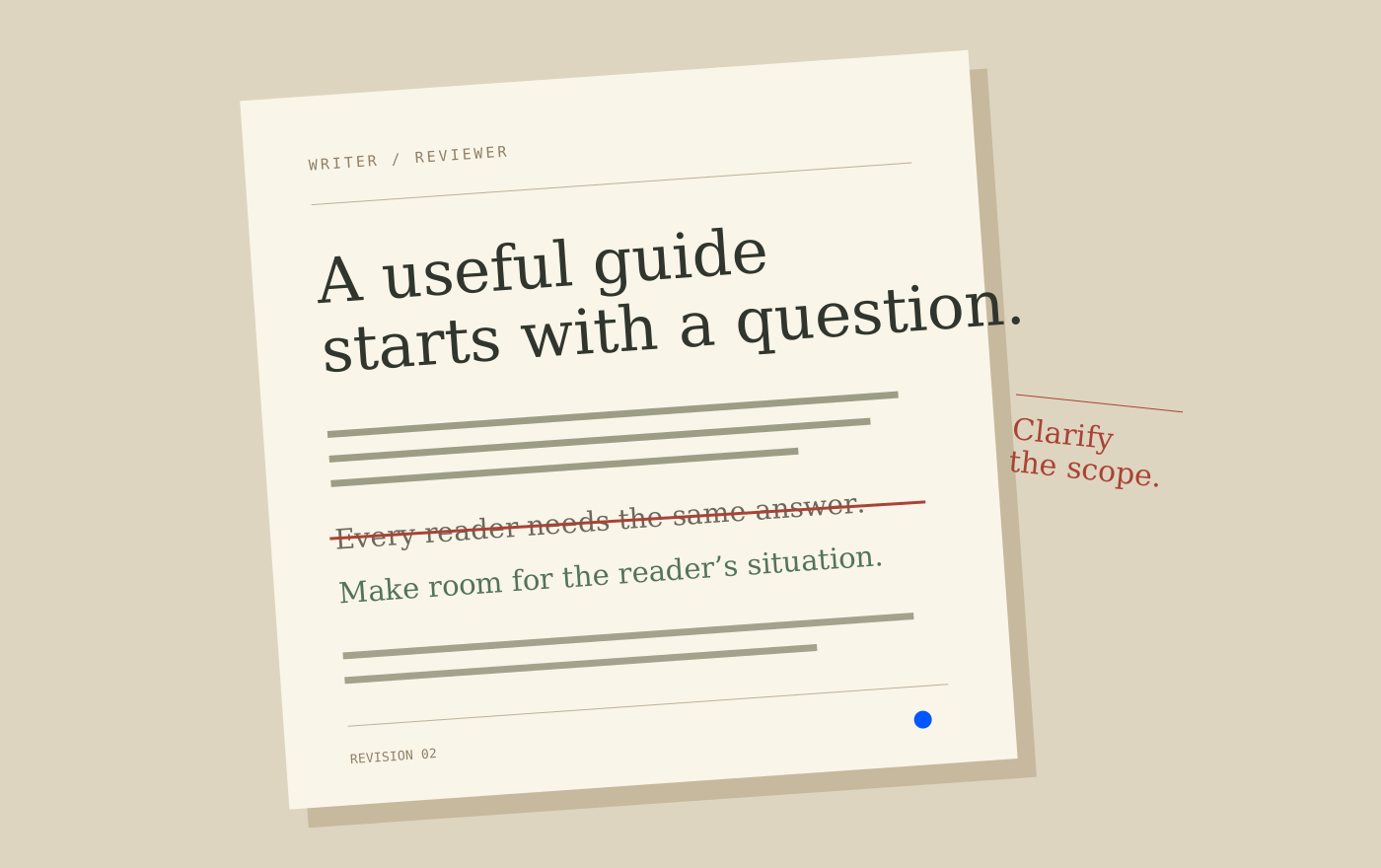
Writing is a start.
Revision is the craft.
Search intent → a working brief
A guide to asking better questions.
A useful answer begins with the question behind it. Start by naming the purpose, then choose the evidence that belongs.
One answer works for every reader.
A short outline keeps the article focused. The next step is to check the reasoning, not simply add more words.
A guide to asking clearer questions.
Begin with what the reader needs to understand. State the scope, separate advice from evidence and make uncertainty visible.
Different contexts need different answers.
Keep the supported structure. Explain the limits and ask for the missing evidence before preparing an owner-reviewed draft.
Prepare the Shopify draft after checks. A changed version needs a new decision.
The right version.
The right decision.
An approval should never silently apply to a different draft. I built version-specific checks and a manual-review route for work that cannot safely continue.
“Different contexts need different answers.”
The person reviews the actual version being prepared for publication.
Brief.Write.Check.Decide.
Built to publish.
Designed to stop.
The workflow has produced published Shopify articles. That working foundation makes the quality controls just as important.
I built separate checks for the brief and article, draft preparation and owner review. Publication history does not imply that every newer approval path is fully validated, or that an article will improve search rankings.
More than generated copy.
An editorial process.